
Seasonal Tire Storage in North Bay
AutoNorth Auto Repair is a North Bay shop that stores customer tires between seasons at 1520 Cholette St, and already keeps close to 200 sets on hand. Your off-season set stays racked at the shop instead of taking up a corner of your garage, and storage customers get their spring and fall changeovers booked before the seasonal rush lands rather than calling in the middle of it.
Last updated August 7, 2026
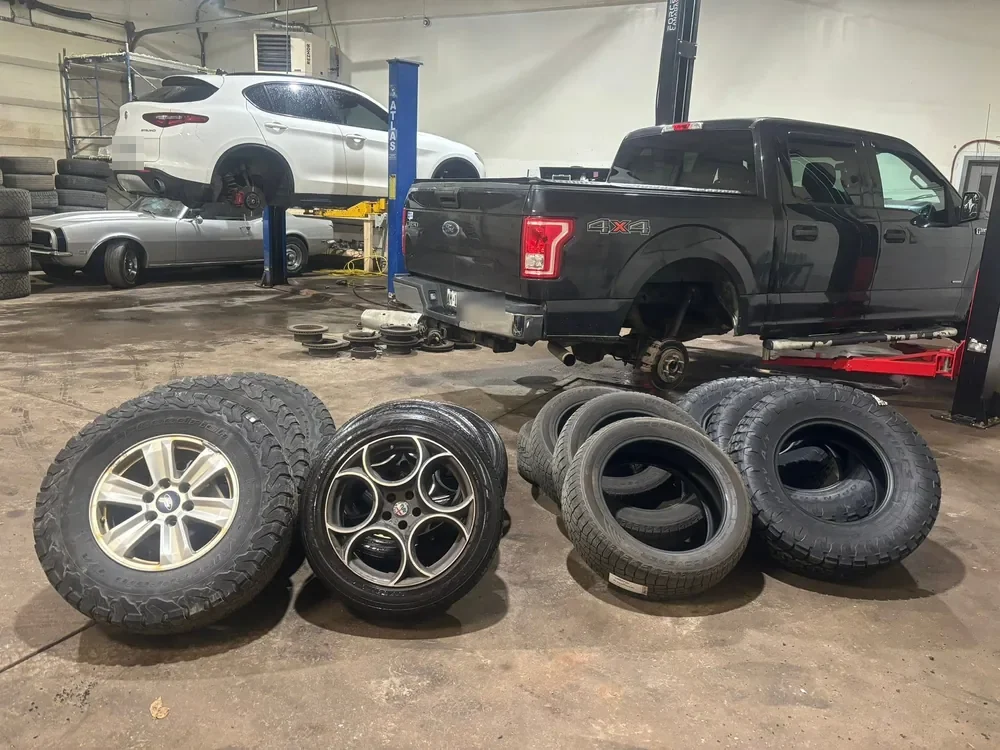
What Does Tire Storage Cost in North Bay?
Seasonal tire storage is $50 a season at AutoNorth, or free with the purchase of a set of four, and it is worth asking about at the same time you price a set of tires, because buying the set and storing it are usually part of the same conversation.
- Ask when you get your tire quote. Storage and a tire purchase tend to get sorted together, so raise it before you buy rather than after.
- Compare it against what the space is worth. Four tires on rims take up a serious corner of a single garage, and most people are storing them somewhere they would rather use for something else.
- Then compare it against the hassle. Loading four wheels into a car twice a year, driving them across town, and unloading them again is the part nobody enjoys.
- It buys you the appointment too. Storage customers get their changeover booked ahead of the seasonal rush, which in October is worth something on its own.
Call AutoNorth at (705) 472-6060 and ask what a season costs for your set. See the AutoNorth tire shop page for mounting, balancing and changeovers.
How Does Seasonal Tire Storage Work at AutoNorth?
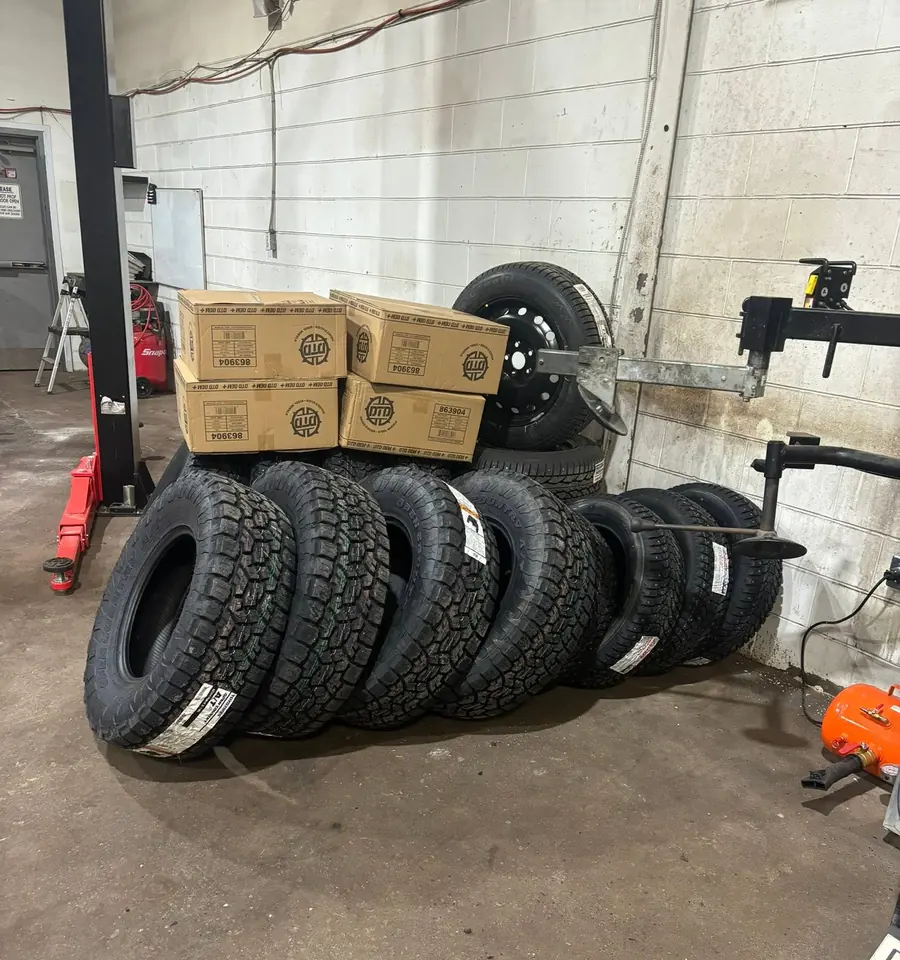
You bring the vehicle in for the changeover, the set coming off stays at the shop, and the set going on gets fitted. AutoNorth already keeps close to 200 sets of customer tires racked at 1520 Cholette St in North Bay.
- Racked and ready, two sets up and down. That is how close to two hundred sets live in one building without becoming a puzzle.
- Off your property, not out in a yard. Ask the shop what its storage area is like if that matters to you, because how tires are kept genuinely affects how they age.
- One appointment, not three. No loading wheels into the back of a car, no trip across town, no unloading them at the other end.
- Your changeover gets booked ahead. Storage customers are scheduled before the rush rather than calling in the middle of it.
- The set gets looked at each time. Tread and condition are visible every time the tires come off and go back on, so you hear about a worn set before the season you needed it.
Does Storing Tires Badly Actually Ruin Them?
It shortens their life. Rubber ages by itself, and sunlight, heat and ozone all speed that up, which is why a set that spent summers on a sunny driveway can be cracked while a set with the same mileage is fine.
- Sunlight is the worst of it. Ultraviolet light breaks rubber down. A tire stored in the sun ages faster than the same tire in a dark corner.
- Heat cycling does not help. A shed that swings from freezing to baking works the rubber every year it sits there.
- Ozone attacks rubber. Which is why the standing advice is to keep tires away from running electric motors.
- Age counts even unused. A tire with plenty of tread can still be too old to be sound, which is why a stored set is worth having looked at rather than assumed.
- Winter sets sit for eight months a year. Two thirds of a winter tire's life is spent in storage, so where it sits matters as much as how it is driven.
Storing Tires at the Shop vs Keeping Them at Home
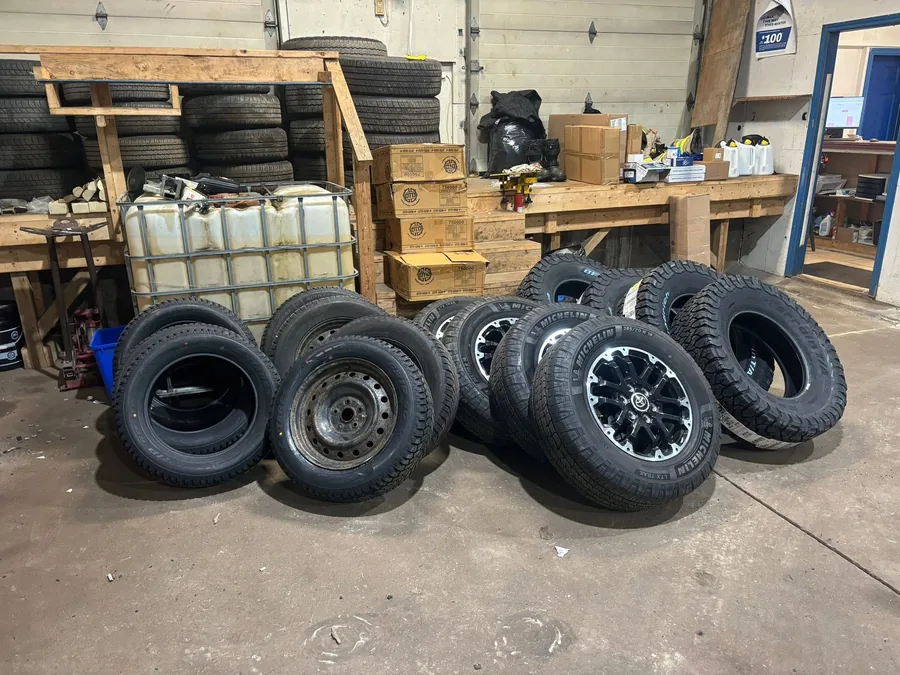
Storing at home costs nothing and costs you a corner of the garage, two trips a year, and the risk of doing it wrong. Storing at the shop costs a fee and removes all three.
| Shop storage vs home storage | Stored at AutoNorth | Stored at home |
|---|---|---|
| What it costs | A seasonal fee | Nothing, plus the space |
| Space it takes | None of yours | A corner of a garage or shed, year round |
| Getting them there | They are already there | Loading and hauling four wheels, twice a year |
| Where they sit | Racked at the shop | Depends entirely on what you have |
| Booking the changeover | Scheduled ahead of the seasonal rush | You call when everyone else calls |
| Best for | Anyone without garage space, or without a vehicle that swallows four wheels | Anyone with dry indoor space and a way to move them |
If you do keep them at home, the basics matter: indoors, out of direct sunlight, away from anything running an electric motor, and stacked flat or stood upright rather than hung by the tread when they are mounted on rims.
When Should You Arrange Tire Storage in North Bay?
Arrange it when you book the changeover, and book the changeover before the weather turns. North Bay's tire season arrives fast and every shop in town fills up inside the same fortnight.
- October for the winter swap. Once the first forecast turns, appointments go out further than anyone wants them to.
- Spring for the way back. Winter rubber wears quickly on warm pavement, so leaving it on burns an expensive set for nothing.
- Buying a set anyway? Sort the storage in the same conversation and the whole thing becomes one appointment twice a year.
- Not sure your set has another winter in it? Ask when it is off the vehicle. That is the easiest moment to look at it properly.
See the AutoNorth winter tires page for what actually separates a winter tire from an all-season, and when the swap should happen.
What Actually Happens When Your Stored Set Goes On?
The wheels come off, your stored set goes on, and everything gets checked while the vehicle is already up in the air. A changeover is the one appointment a year where all four corners are exposed at once.
- Your set gets pulled and matched. Labelled to you and your vehicle, which is the whole reason two hundred sets can live in one building without turning into a puzzle.
- Tread and condition get looked at. Wear across the tread, uneven wear that points at alignment or suspension, sidewall damage and cracking from age. You hear about a set that will not make another winter now, not in October when the snow is already down.
- The things a proper changeover covers. Tire pressure monitoring sensors dealt with at the swap rather than left to trigger a light on the way home, pressures set to the manufacturer's specification, and wheels torqued correctly rather than run up with an impact gun. Ask AutoNorth what its changeover includes.
- Brakes are right there. With the wheels off, a look at pads and rotors costs nothing extra in time. Anything flagged comes to you with a photo through the digital inspection.
See the AutoNorth brake repair page if that is where the conversation ends up, and the wheel alignment page if the wear pattern says the geometry has moved.
How Long Does a Stored Set Actually Last?
Longer than a set that lives outside, and not forever. Tires age on the calendar as well as on the road, so a winter set that only works four months a year still gets older during the other eight.
- Tread depth is only half the answer. A set can have plenty of tread left and still be too old to rely on, because the rubber hardens as it ages and a hard winter tire is a winter tire that has lost the thing you bought it for.
- There is a date on the sidewall. A four-digit code gives the week and year the tire was made. Ask AutoNorth to show you where it is on yours if you have never looked.
- Where it sits buys you time. Out of sunlight and out of the temperature swings, any stored set ages considerably more slowly than the same set left in a driveway or an uninsulated shed.
- Cracking is the tell. Fine cracks in the tread grooves or the sidewall mean the rubber has started to go, whatever the tread depth says.
- The changeover is the moment to ask. Twice a year your tires are off the vehicle and in someone's hands. That is the cheapest possible time to get a straight answer about how many seasons are left.
AutoNorth will tell you honestly when a set has one more season in it and when it does not, rather than selling you tires you did not need yet.
Tire Storage: Common Questions
How many sets of tires does AutoNorth store?
Close to 200 sets of customer tires are kept racked at the shop on Cholette St, two sets up and down. Call (705) 472-6060 to ask about getting yours in.
Do I need to buy my tires from AutoNorth to store them there?
Ask the shop. Storage and a tire purchase usually get arranged in the same conversation, so raise it when you call about either one and AutoNorth will tell you what it can do for your set.
Is it bad to store tires in a shed or outside?
It shortens their life. Sunlight, heat swings and ozone all age rubber faster, so a set that spends its summers in a sunny spot can crack while an identical set kept dark and cool stays sound. Out of direct sun is the standard to aim for.
Should tires be stored upright or stacked flat?
Tires mounted on rims are usually stacked flat or stood upright rather than hung by the tread, because hanging a mounted wheel puts the weight on the tread. Unmounted tires are normally stood upright. Either way, keep them out of sunlight.
Can I get my stored tires back if I sell the vehicle?
They are your tires, so yes. Call AutoNorth at (705) 472-6060 to arrange picking them up, and give the shop a little notice so the set is pulled and ready when you arrive.
Get Your Off-Season Set Out of the Garage
Call AutoNorth to ask what a season costs for your set and to get your changeover booked before the rush.