Auto Repair and Trailer Inspections for Bonfield Drivers
AutoNorth Auto Repair is a licensed auto repair shop at 1520 Cholette St in North Bay, open Monday to Friday from 8:00am to 5:00pm, and the Township of Bonfield puts itself just 31 km east of North Bay via Highway 17. Bonfield's economy runs on forestry, logging, tourism and some farming, which is another way of saying a lot of the vehicles there work for a living and a lot of them tow. This page covers what to have looked at before a season of towing, what a light trailer actually needs, and the honest answer about which trailers Ontario requires to be inspected every year and which ones it does not.
Last updated August 10, 2026
How Far Is AutoNorth From Bonfield?
The Township of Bonfield describes itself as just 31 km east of North Bay via Highway 17, so the run west into town is one Trans-Canada highway rather than a stitched-together series of back roads. AutoNorth Auto Repair is at 1520 Cholette St in North Bay, open Monday to Friday from 8:00am to 5:00pm. That route matters more when there is a trailer on the back than it does for a car on its own.
- Highway 17 is the Trans-Canada. It is the road the township names when it gives its own distance from North Bay, and it is the road a loaded truck wants: one continuous highway with the town driving saved for the North Bay end.
- Highway 531 is 3.5 km long, start to finish. It runs from Maple Road in Bonfield north to Highway 17 and encounters no roads along its length other than at its two ends. Its sole purpose is to connect the community of Bonfield with Highway 17.
- That connection has been the same piece of road since 1956. Highway 531 was assumed by the Department of Highways in early 1956 and is unchanged since, so nothing about the way out of the community toward North Bay has been re-routed on anyone.
- Rutherglen sits directly on Highway 17. Drivers from that end of the township are already on the highway before they start, which is a different trip from the one that begins on Maple Road.
- The township is much bigger than the village. Bonfield covers 206.22 km² of Nipissing District and takes in the communities of Bonfield, Rutherglen, Grand Desert and Blanchard's Landing. It sits on the Mattawa River and on the north shore of Lake Nosbonsing, with the Kaibuskong River crossing it.
- 2,146 people, on a lot of ground. The 2021 Census counted 2,146 residents, up from 1,990 in 2016, in a township whose official name is the Township of Bonfield / Canton de Bonfield and whose motto is "Small Community, Big Heart".
- It started as a railway stop in 1882. The township was first settled that year as a Canadian Pacific Railway station, and was originally called Callander Station, which is why place names in this corner of Nipissing District can look like they belong somewhere else on the map.
AutoNorth Auto Repair. 1520 Cholette St, North Bay, Ontario P1A 0A9. Monday to Friday, 8:00am to 5:00pm, closed weekends. Call (705) 472-6060 or text (705) 571-4391.
DirectionsDriving Directions From Bonfield to AutoNorth
AutoNorth Auto Repair is at 1520 Cholette St, North Bay, Ontario P1A 0A9. Tap the button and Google Maps opens the route from Bonfield on your phone, ready to navigate.
Parking is on the gravel lot out front. If the shop is closed when you arrive, the after-hours key drop is at the building and the work starts first thing in the morning.
What to Have Looked At Before a Season of Towing
Everything that carries heat, weight or torque. A tow vehicle very rarely fails because it towed once. It fails because a whole season of towing found the part that was already marginal back in April, and nearly all of that is visible on a hoist before the first trip of the year rather than after it.
- Heat reaches the transmission first. An automatic pulling a loaded trailer runs hotter than the same unit running empty, and heat is what shortens the life of the fluid and then of the transmission behind it. A transmission service booked in spring is a fraction of what the alternative costs in August.
- The cooling system has two jobs once a trailer is attached. It sheds engine heat and, on most vehicles, transmission heat as well. A tired rad, a weak cap or a thermostat that opens late is survivable when the box is empty and is a very different proposition on a grade with a load behind you. That is engine work nobody wants to discover at the side of the highway.
- Brakes have to stop the trailer as well as the truck. Pads and rotors that are perfectly adequate for a commute are the same pads and rotors asked to haul a combined weight down a hill all summer. Brake repair is the one item on this list where being early has an obvious payoff.
- Tongue weight lands on the rear axle and stays there. Rear springs, shocks, bushings and the steering all carry it, which is why a suspension and steering inspection on a vehicle that tows finds different things than the same inspection on one that does not.
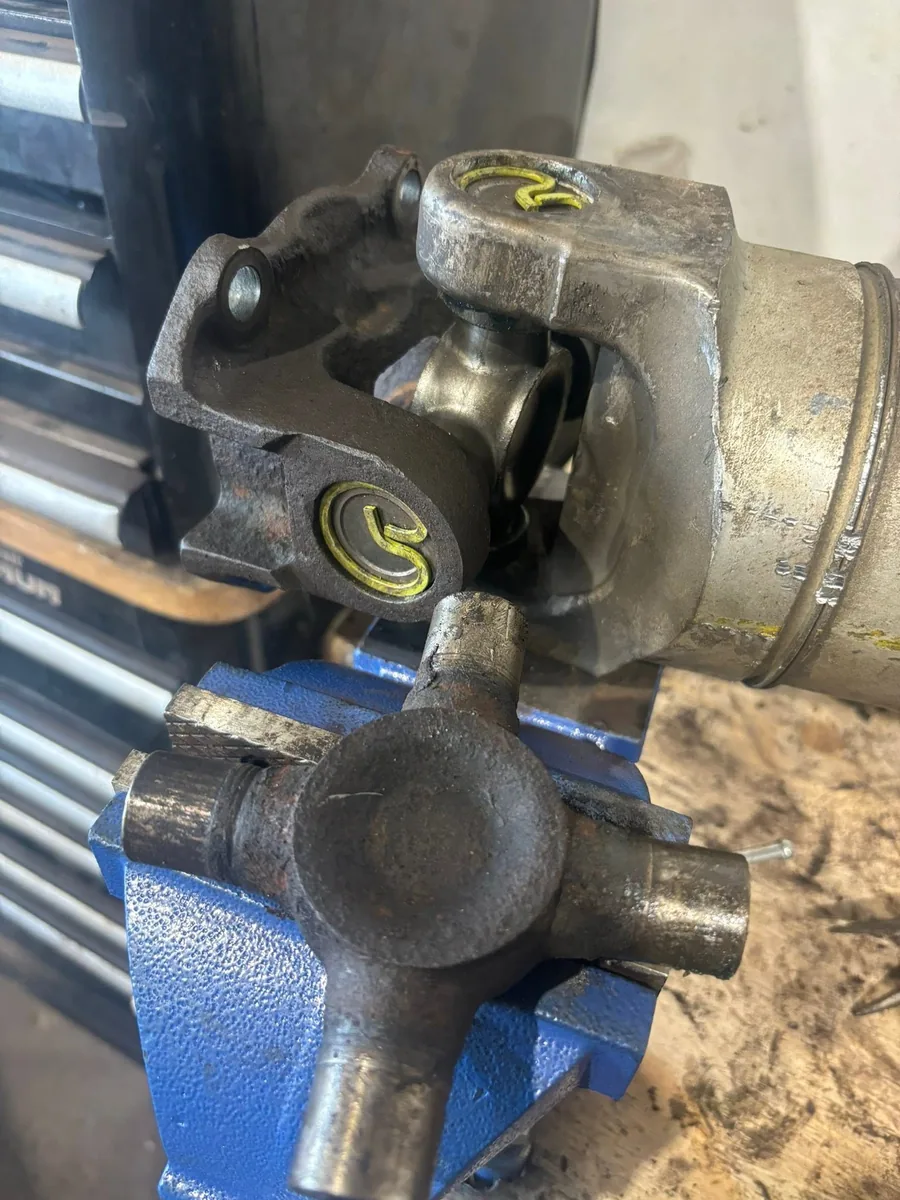
- Driveline parts wear where the torque goes. Universal joints, carrier bearings and CV boots live under load every time the trailer moves. A vibration that only shows up when something is hitched on is a driveline conversation, not a tire conversation.
- Tires are rated for a load, not just for a size. The number on the sidewall that matters for towing is the load index, and pressures for a loaded vehicle are usually not the pressures on the door sticker for an empty one. Get both sorted at the tire shop before the trailer goes on.
- Alignment decides what the tires look like in October. A truck that spends a season carrying weight it did not carry last year will show it on the inside edges. A wheel alignment is the cheapest way to stop a set of load-rated tires being ruined in one summer.
Book it before the season rather than during it. Call (705) 472-6060 or text (705) 571-4391 and say up front that the vehicle tows, because that changes what a technician looks at and the order it gets looked at in.
What Towing Actually Does to a Working Vehicle
It concentrates wear. Bonfield's economy runs on forestry, logging, tourism and some farming, which is a fair description of vehicles that carry and pull things for a living, and a vehicle that works wears out in a different order than one that commutes empty.
- Heat is most of the story on the drivetrain. Fluid that has been cooked does not go back to being fluid that has not. Service intervals published for an empty vehicle are the wrong intervals for one that spends its summer hitched to something.
- Weight transfer is permanent, not occasional. A trailer that lives on the ball for five months puts its tongue weight on the rear axle for five months. Springs sag, shocks fade and bushings go, and the first symptom is usually headlights aimed at the treetops rather than a noise.
- Stopping distance is the number that changes fastest. Nothing about a heavier combination is forgiving of brakes that were already at the wear line, and a hill with a load behind you is where that gets discovered.
- Tires get chosen by load rating, not by whatever is cheapest. AutoNorth stocks 21 tire brands and does mounting, balancing, puncture repair and seasonal changeovers, so putting a properly load-rated tire under a truck that tows is a conversation rather than a matter of what happens to be in the rack.
- Winter is a compound problem before it is a tread problem. Winter tire compound stays flexible below roughly 7 degrees Celsius, while all-season compounds stiffen around the same point. That gap matters more, not less, on a vehicle that is carrying weight. See winter tires for what actually separates the two.
- The off-season set does not have to take up the shop or the shed. Seasonal tire storage runs $50 a season, or free with a set of four, and close to 200 customer tire sets are racked at the shop between seasons, which is one less thing stacked in a corner where the trailer wants to be parked. That is what tire storage is for.
- Every make, and every fuel. AutoNorth services all makes and models, gas, diesel and hybrid, and the shop is run by a Toyota-certified Master Technician with hybrid certification who trained at Centennial College. The diesel three-quarter-ton and the hybrid in the same driveway go through the same door.
Trailers That Need an Annual Inspection vs Trailers That Do Not
Ontario draws the line at 4,500 kg, and it draws it on a rating rather than on a load. The annual safety inspection applies to trucks, trailers and converter dollies rated over 4,500 kg by total gross weight, registered gross weight, or the manufacturer's gross vehicle weight rating, and it is valid for 12 months. Most boat trailers and small utility trailers sit well under that figure and need no annual inspection at all.
| Trailers that need an annual inspection vs trailers that do not | Rated over 4,500 kg | Rated 4,500 kg or less |
|---|---|---|
| What the rule actually measures | Total gross weight, registered gross weight or the manufacturer's gross vehicle weight rating, alone or in combination. It is a rating on paper, not what is loaded in the trailer this morning. | The same three figures, sitting at or below the line. Loading a light trailer heavy for one trip does not create an annual inspection requirement, and running a heavy one empty does not remove one. |
| How often it has to be redone | Every 12 months, for as long as the unit stays in service. The decal records the month and year, and it does not send reminders. | Never, because there is nothing to redo. No decal, no expiry date, no annual booking to forget about. |
| What the owner should do instead | Book the inspection with enough room left to repair whatever it turns up, ahead of the season rather than in the middle of it. | Maintenance rather than paperwork. Wheel bearings, lights and wiring, the coupler and chains, the tires and the frame. None of it is compelled by a certificate, and all of it is what actually strands a trailer. |
| The exemption worth reading twice | A pickup and the trailer it tows are exempt when the outfit is used for personal purposes without compensation, carries no commercial tools, cargo or equipment, and the pickup is rated 6,500 kg gross vehicle weight or less with its original or an unmodified replacement box. Haul for pay and the exemption stops applying. | Already out of scope on the rating alone, so the exemption changes nothing either way. |
| Who to ask when it is borderline | Read the ownership first, then call AutoNorth at (705) 472-6060 with the ratings and the axle count. AutoNorth is a licensed MTO Motor Vehicle Inspection Station. | Same call, shorter answer. Ask before booking anything, because being told you do not need an inspection costs nothing. |
Getting this wrong is expensive in both directions. Guess high and you pay for an inspection the province never asked you for. Guess low and you find out from someone in a marked car. The deciding numbers are on the ownership and on the manufacturer's plate, not in what the trailer gets used for, so read them before assuming. If the unit does sit over the line, AutoNorth performs annual trailer safety inspections as a licensed station, and issues Ontario Vehicle Safety Certificates for cars and light trucks as well.
What a Light Trailer Needs If It Does Not Need an Inspection
Maintenance, and somebody remembering to do it. A trailer under the 4,500 kg line has no certificate to earn and no decal to renew, which means nothing external ever forces anyone to look at it. The things that leave a trailer sitting on the shoulder of Highway 17 in July are almost never the things a certificate would have caught anyway.
- Wheel bearings are the classic failure. They are the reason a trailer ends up on the gravel with a smoking hub. Play, roughness, heat colouring on the spindle and a seal that has started weeping are all findable long before the bearing lets go.
- Lights, wiring and the ground. Running lights, brake lights, signals and the plug itself. A corroded ground is behind a startling share of trailer light faults, and it is the sort of thing that gets blamed on the bulb for two seasons.
- The coupler, the latch and the chains. A latch that closes without actually latching is a real failure mode. Chains have to be present, undamaged, and long enough to cross under the tongue without dragging on the pavement.
- Trailer tires age out before they wear out. A trailer tire can have most of its tread and still be finished, because it has been sitting in one spot in the sun for eight years. Check the sidewalls for cracking, not just the tread depth.
- The frame, the welds and the floor. Empty the trailer and look underneath. Crossmembers, previous repairs, rot in a wood deck and rust where the springs hang are all easier to deal with in a driveway in May than in a ditch in July.
- Ask before booking anything at all. Call (705) 472-6060 with the trailer's rating and axle count. Ask what the shop can put through and what it would have to send elsewhere. Being told you do not need something is a shorter phone call than being sold it.
How Much Does a Service Visit From Bonfield Cost?
AutoNorth quotes the price before the work is done. An oil change is quoted before you book for gas and diesel, with a new filter, a 120-point visual inspection and a wash, and everything past that is quoted before it is done rather than explained afterwards.
- Oil changes are quoted before you book. That covers gas and diesel, a new filter, the 120-point visual inspection and a wash. Diesels and larger-capacity engines hold more oil, so give the year, make and model when booking and the number comes back before the drive in.
- The 120-point visual inspection is where a working vehicle gets caught early. It is the routine visit that finds the sagging spring, the weeping bearing or the pad that will not survive a towing season, at a point where it is still a small job.
- Photographs and video before anything is approved. Digital inspection reports go out by both text and email, with photos and video of your own vehicle grouped by priority, and each item is approved or declined from a phone or a computer without a phone call. From 31 km out that is the difference between one trip and three.
- Nobody in the building earns more by finding work. Technicians are paid straight time, not flat rate, so no one is paid more for rushing a vehicle through or for writing up an extra item.
- Larger bills can be spread out. Third-party financing is available through AT Clarke Enterprises, which is worth knowing before a truck fails on something structural in the middle of a season.
- Warranty and fleet work go through the same door. AutoNorth is an approved repair facility for Canada General and Global Warranty, and a certified Holman service shop for government and municipal fleets.
- Rated 5.0 across 24 Google reviews. The shop opened on Cholette St in September 2025 and has been building that record since.
There is a customer shuttle, including rides home, and an after-hours key drop so a work truck can be left the night before with the job starting first thing in the morning. Mention whichever one you want when you book so it can be arranged rather than improvised on the day. Parking is on the gravel lot out front.
Services for Bonfield Vehicles That Work for a Living
Towing, hauling and a long highway run into town decide most of this list. AutoNorth handles all of it at 1520 Cholette St, on all makes and models, gas, diesel and hybrid.
Trailer Inspections
Ontario's annual safety inspection for units rated over 4,500 kg, from a licensed station.
Read moreTransmission Service
Heat is what a towing season does to an automatic. Service it before the season.
Read moreBrake Repair
Pads, rotors and lines on a vehicle that has to stop a load, not just itself.
Read moreSuspension & Steering
Springs, shocks, bushings, ball joints and tie rods under tongue weight.
Read moreTires
21 brands stocked, with load-rated options for trucks that tow, plus changeovers.
Read moreSafety Inspections
Ontario Vehicle Safety Certificates for cars and light trucks.
Read moreEverything else is on the full services list, and the contact page has the map, the hours and the booking form.
Bonfield: Common Questions
How far is AutoNorth from Bonfield?
The Township of Bonfield describes itself as just 31 km east of North Bay via Highway 17, and AutoNorth Auto Repair is at 1520 Cholette St in North Bay. From the community of Bonfield the link to the Trans-Canada is Highway 531, which is 3.5 km long, runs from Maple Road north to Highway 17, and exists for no other purpose than that connection. Rutherglen sits directly on Highway 17, so drivers from that end of the township are already on the highway when they start.
Which trailers does Ontario require to be inspected every year?
Ontario's annual safety inspection applies to trucks, trailers and converter dollies rated over 4,500 kg by total gross weight, registered gross weight, or the manufacturer's gross vehicle weight rating, and it is valid for 12 months. The critical word is rated. It is a figure on the ownership and on the manufacturer's plate, not what happens to be loaded in the trailer that morning. Most boat trailers and small utility trailers sit well under 4,500 kg and need no annual inspection at all. There is also an exemption for a pickup and the trailer it tows when the outfit is used for personal purposes without compensation, carries no commercial tools, cargo or equipment, and the pickup is rated 6,500 kg gross vehicle weight or less with its original or an unmodified replacement box.
Bonfield is on Lake Nosbonsing. Does a boat trailer need an inspection before launch season?
Almost certainly not. Lake Nosbonsing runs 11 km at its maximum length and 5 km at its widest, and it is shared with Chisholm and East Ferris, and the township lists boat launches among its Get Outdoors services. None of that changes the rule: most boat trailers are rated a long way under 4,500 kg, so no annual safety inspection is required. What a boat trailer does need before it goes in the water is wheel bearings checked, lights and wiring proven, the coupler and chains looked over, and the tires inspected for sidewall cracking rather than just tread. Call (705) 472-6060 with the trailer's rating and axle count and you will get a straight answer on which side of the line it sits.
Can I leave a work truck overnight instead of driving in from Bonfield twice?
Yes. There is an after-hours key drop at the Cholette St shop, so the vehicle can be left the night before and the work starts first thing in the morning. There is also a customer shuttle, including rides home, if you would rather drive in and get taken somewhere. Mention either one when you book so it can be arranged in advance. From 31 km out, the key drop turns a repair into one drive instead of two.
What should be checked on a tow vehicle before a season of towing?
The things that carry heat, weight and torque. Transmission fluid and the cooling system, because heat is what shortens the life of both. Brakes, because they have to stop a combination rather than just the vehicle. Rear springs, shocks and bushings, because tongue weight sits on the rear axle for as long as the trailer is attached. Universal joints and CV boots, because that is where the torque goes. Tires, because the load index matters more than the size, and the pressures for a loaded vehicle are usually not the pressures on the door sticker. Say the vehicle tows when you book, because that changes what a technician looks at and in what order.
What will I be told about the price before I book?
The price for your vehicle, before you drive in. An oil change covers gas and diesel with a new filter, a 120-point visual inspection and a wash, and is quoted for your vehicle before you book. Diesel engines hold considerably more oil, so the number depends on what you drive. Call the shop with your year, make and model and AutoNorth will tell you the price for your vehicle before you book, not after the hood is up. Everything past the oil change is quoted before the work happens.
Book Before the Towing Season, Not During It
Call or text AutoNorth with what the truck or trailer is doing, and say up front that the vehicle tows. Ask about the shuttle or the after-hours key drop and the drive in from Bonfield becomes one trip instead of two.